Key Takeaways
- Instagram has 2 billion monthly active users in 2026. Reels receive 22% more interaction than any other content format on the platform (Socialinsider, 2026).
- The Instagram algorithm in 2026 uses separate ranking systems for Feed, Reels, Explore, and Stories — optimizing for one does not automatically improve the others.
- Instagram reach typically drops 30 to 50% in the first 6 months for accounts that stop posting consistently. The algorithm deprioritizes accounts it cannot predict.
- Hashtags in 2026 function as content classification signals, not discovery amplifiers. 3 to 5 specific niche hashtags outperform 30 broad ones.
- Reels are the primary growth lever for new accounts without an existing audience — 74% of Reels views come from non-followers on accounts under 10,000 followers.
Instagram has changed more in the past 18 months than in the previous five years combined. The platform moved from a photo-first feed to a Reels-first algorithm, rebuilt its hashtag classification system twice, and introduced distribution penalties for content that the algorithm cannot categorize clearly. What worked in 2023 actively hurts reach in 2026 on most account types.
This guide maps the current Instagram growth system: how the algorithm works across each surface (Feed, Reels, Explore, Stories), how to grow with no existing audience using Reels, why hashtags stopped working for many accounts and how to fix it, and how to diagnose and recover from an Instagram reach drop. Every section links to a dedicated deep-dive guide.
How the Instagram Algorithm Works in 2026
Instagram does not have one algorithm. It has four: one for the Home Feed, one for Reels, one for Explore, and one for Stories. Each ranks content on different signals and serves a different user behavior. Optimizing a post for one surface does not automatically improve performance on the others. Most creators who complain about "the algorithm" are actually running into a surface mismatch — they are optimizing for Feed when their content format should be targeting Reels or Explore.
Reels are ranked primarily on watch-through rate (what percentage of viewers watch to the end), shares to external platforms, and saves. Feed posts are ranked on likes, comments, and send rate (how often the post is sent to another account via DM). Explore is ranked on engagement velocity — how quickly interaction accumulates in the first hour. Stories are ranked on DM replies and poll interactions from existing followers.
The most important 2026 change: Instagram now suppresses reach for accounts that post political content, unoriginal (reposted) content, or low-resolution media — regardless of engagement rate. These suppressions are account-level, not post-level, which means one suppressed post type can reduce reach across the entire account. Keeping your content original, visually sharp, and non-political is now a baseline technical requirement, not a creative choice.
Our Instagram Reels algorithm guide covers the full 2026 ranking system, how each surface's signals differ, and the content formats that consistently reach non-followers in the current algorithm environment.
Citation capsule: Instagram runs four separate ranking systems for Feed, Reels, Explore, and Stories, each weighted on different engagement signals. Reels receive 22% more interaction than any other Instagram content format in 2026 (Socialinsider, 2026). The platform suppresses reach for low-resolution media, reposted content, and political posts at the account level — meaning a single non-compliant post type can reduce reach across an entire account.
Instagram Reels — The Fastest Way to Grow Without an Existing Audience
Reels are the only Instagram surface where non-follower reach is the default rather than the exception. The Reels feed is discovery-first: users scroll content from accounts they do not follow, and the algorithm serves content based on their past interaction patterns rather than their follow list. For accounts without an existing audience, Reels is the only place to compete for attention on an even playing field.
Accounts under 10,000 followers see 74% of their Reels views come from non-followers. This number inverts as accounts grow — at 100,000 followers, follower-sourced views increase because the algorithm uses your follower base as a lookalike seed for distribution. This means the Reels strategy for new accounts (optimize for discovery, prioritize shareability) is different from the Reels strategy for established accounts (optimize for depth, reward existing followers).
The most effective Reels for new accounts in 2026 are under 30 seconds, hook within the first 2 seconds, and end with a visual or informational payoff that viewers save or share. Educational mini-tutorials, quick transformations, and "did you know this?" reveals consistently outperform talking-head content at the growth stage because they generate saves — and saves are the highest-weight signal in Reels distribution.
Our Instagram Reels guide for beginners with no followers covers the posting frequency that maximizes Reels reach, the hook formats that stop scrolling in the first 2 seconds, caption strategy, and the hashtag approach that works with the current algorithm. The Instagram Reel Idea Generator produces niche-specific Reel concepts ranked by shareability potential.
Instagram Hashtags in 2026 — What Still Works
Instagram hashtags stopped functioning as discovery amplifiers in the way they did before 2022. Instagram's own documentation updated in 2024 confirmed that hashtags are now read by the algorithm as content classification signals rather than distribution boosters. The algorithm uses your hashtags to understand what your post is about and match it to relevant audiences — not to show your post to everyone following that hashtag.
The practical implication: fewer, more specific hashtags outperform more, broader ones. 3 to 5 niche-specific hashtags (under 500,000 posts) that precisely describe your content topic give the algorithm clear classification signals. 30 generic hashtags (#love, #instagood, #photooftheday) give no useful classification signal and can trigger an "inauthentic activity" flag that reduces reach. The hashtag strategy that maximized reach in 2020 is the same strategy that limits it in 2026.
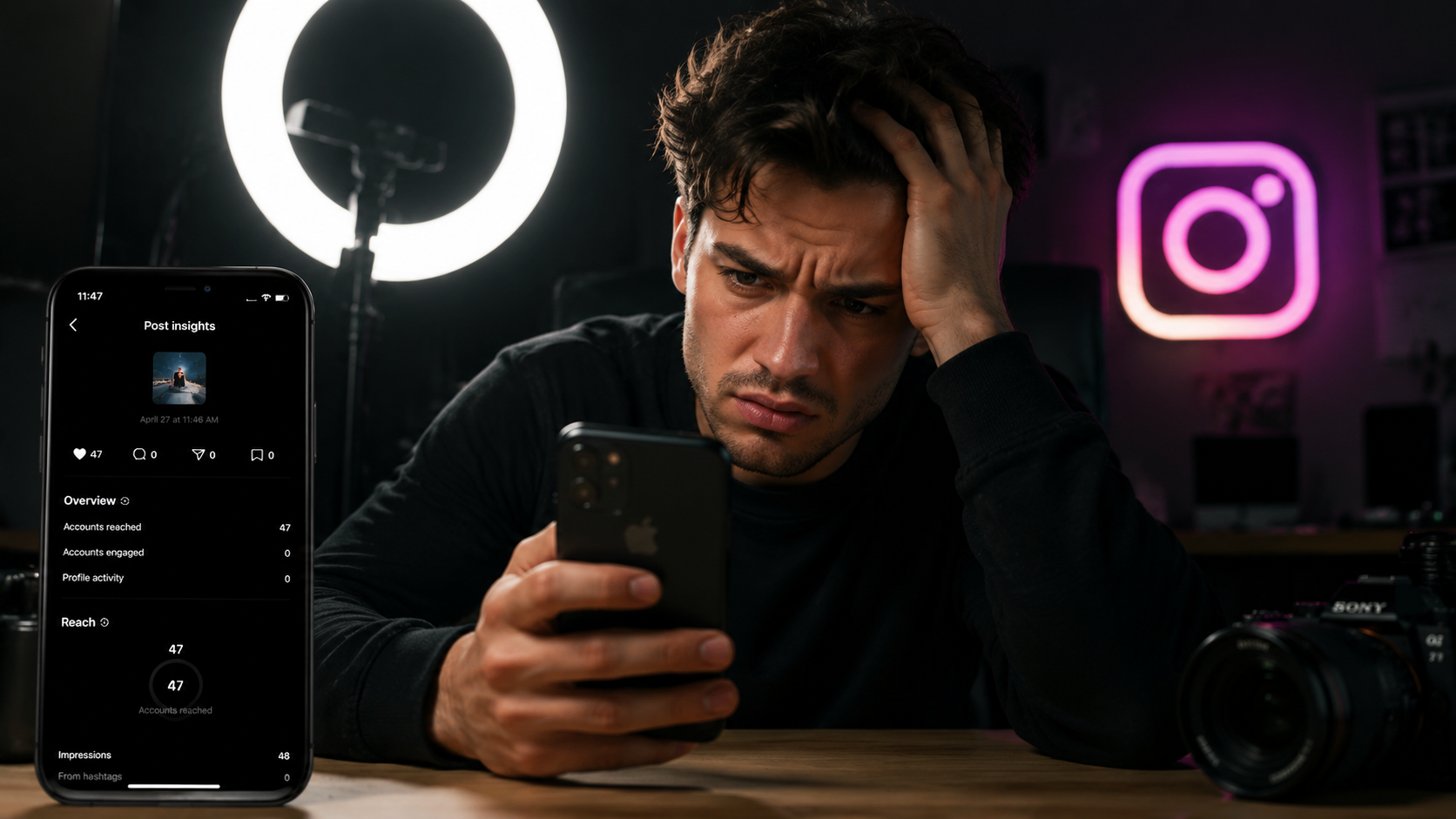
If your hashtag reach has dropped to near zero while overall reach is fine, hashtags are not causing a problem — they just stopped contributing. If your overall reach has dropped, our Instagram hashtags not working guide covers the five-step diagnosis: checking for shadow restrictions, auditing hashtag specificity, separating hashtag reach from overall reach in Analytics, and rebuilding a hashtag strategy that works with the current classification system.
The Instagram Hashtag Generator builds niche-specific hashtag sets in the 10K to 500K post range — the classification sweet spot for 2026.
Instagram Reach Problems — Why It Drops and How to Fix It
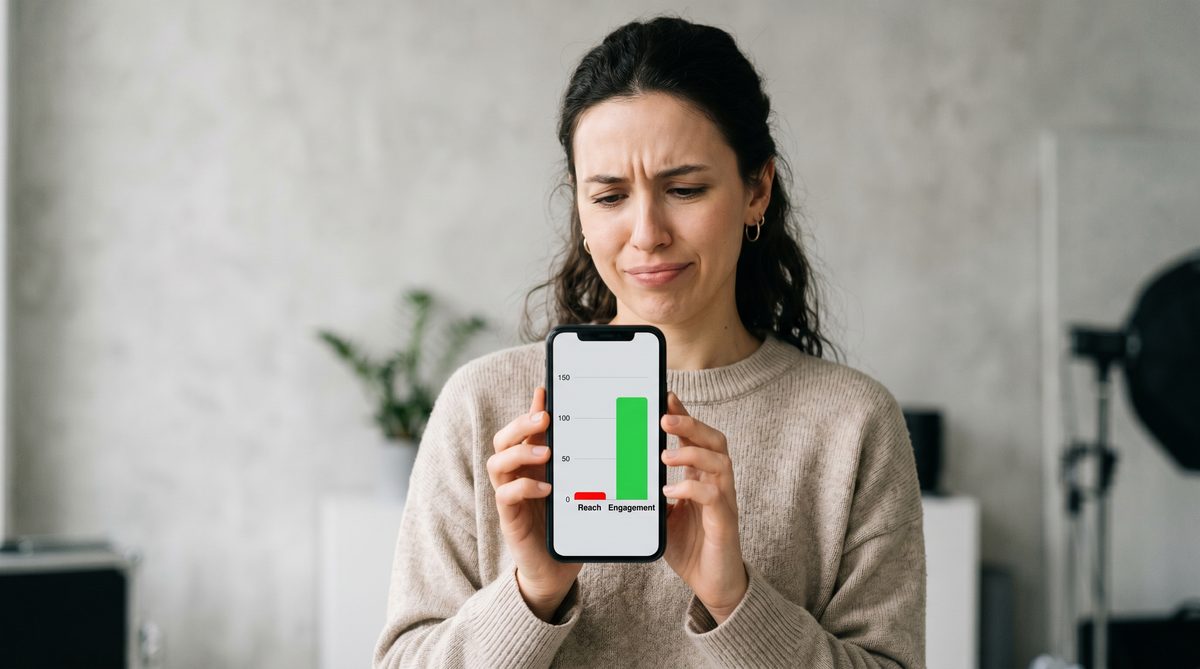
Instagram reach drops for three distinct reasons, and diagnosing which one applies changes the fix completely. The first is an algorithm deprioritization caused by inconsistent posting — accounts that post sporadically are treated as inactive and receive reduced distribution to protect user experience. The second is a content-type mismatch: creating Feed posts when your audience engages primarily with Reels, or vice versa. The third is a technical restriction: low-resolution media, watermarked content (from TikTok or CapCut), or copyright-flagged audio reduces reach at the post level and sometimes at the account level.
Our Instagram reach drop diagnosis guide walks through the exact steps to identify which category your reach problem falls into and what to do in each case. For the specific problem of Reels not being shown to non-followers or not appearing on the Explore page, our Instagram Reels not showing to non-followers guide covers the nine technical and content causes and their fixes.
Free Instagram Tools at CreatorsToolHub
Every Instagram tool below is free, requires no account, and targets a specific bottleneck in the Instagram content workflow — from Reel idea generation to engagement benchmarking to earnings estimation.
- Instagram Reel Idea Generator — Niche Reel concepts ranked by shareability and Explore potential
- Instagram Hook Generator — First-frame hooks that stop scrolling within 2 seconds
- Instagram Caption Generator — Captions with niche keywords, narrative structure, and engagement CTAs
- Instagram Hashtag Generator — Specific niche hashtags in the 10K-500K range for accurate content classification
- Instagram Bio Generator — Bios that convert profile visitors into followers with a clear value proposition
- Instagram Content Planner — Weekly content schedule aligned to your niche and posting frequency
- Instagram Username Generator — Brandable, searchable username ideas for any niche
- Instagram Engagement Calculator — Benchmark your engagement rate against the 2026 platform average
- Instagram Money Calculator — Estimate brand deal rates and creator earnings from your follower count and niche
Frequently Asked Questions
How many Instagram followers do you need to make money?
Brand deals become accessible at 3,000 to 5,000 followers for nano-influencers in specific niches — lifestyle, fitness, food, and parenting pay the highest rates at small follower counts. Instagram's own monetization features (Creator Badges, Subscriptions) require 10,000 followers. For the Reels Play Bonus Program, eligibility varies by region and is invitation-only. Nano-influencer brand deal rates typically run $50 to $300 per post at 3K to 10K followers. Use the Instagram Money Calculator to estimate realistic rates based on your niche and engagement rate.
How often should you post on Instagram to grow in 2026?
Posting 4 to 5 Reels per week is the most effective frequency for accounts in growth mode, according to Hootsuite's 2025 Instagram analysis of 30,000 accounts. Feed posts should supplement Reels at 2 to 3 per week for accounts with established audiences. Consistency matters more than volume — posting 3 times per week every week outperforms 10 posts in one week followed by silence. The algorithm rewards predictability because it needs to model when and how often to surface your content to your audience.
Why are my Instagram Reels not getting views?
The four most common causes: hook fails to hold viewers past the 2-second mark (check average watch time in Insights), watermarked content from TikTok or CapCut triggers suppression, audio is copyrighted and blocked in key markets, or the account is in a reach restriction from previous policy violations. Check Insights for the Reels play source breakdown — if 90%+ of plays come from followers, your Reel is not being distributed to Explore. Our Reels not showing to non-followers guide covers all nine causes and their specific fixes.
Does posting at the right time on Instagram still matter?
Time of posting affects the first 30 to 60 minutes of a post's reach, not its total reach. Since the algorithm now uses engagement velocity (how quickly interaction accumulates) rather than follower time-zone proximity as its primary distribution signal, posting when your existing followers are online still helps — but it matters less than hook quality and content specificity. Check Instagram Insights under Your Audience for active hours, post within 2 hours of peak activity, and focus the remaining optimization effort on the hook and format quality.
Is Instagram still worth starting in 2026?
Yes. Instagram has 2 billion monthly active users and only 26% of small businesses are actively using creator tools on the platform. The Reels algorithm gives new accounts non-follower reach from day one, which is not true on YouTube or LinkedIn. The barrier is content quality: the platform's visual standards are higher than TikTok, and low-production content is suppressed more aggressively. For niches with a strong visual component — food, fashion, fitness, interior design, travel — Instagram is the highest-reach free platform available to new creators in 2026. Use the Instagram Reel Idea Generator to find content formats that fit both the algorithm and your niche before committing a production schedule.